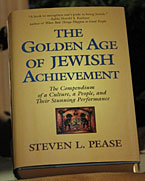
The End of The Golden Era?©
"The main thrust of Jewish demographic change over the . . . post-World War II period, and more intensely since the 1990s, included overall quantitative stagnation at the global level, considerable aging due to comparatively low fertility rates. . . and a dramatic migration . . . from Muslim countries and Eastern Europe to Israel, and to . . . western countries. In turn . . . negative balances of . . . births and deaths, and of weak propensities to raise (as Jews) . . . the children of intermarriages, further impacted Jewish population size and distribution. . . . Entire Jewish communities dried up completely . . . and others shrank significantly. . . Israel, from a relatively small and marginal Jewish community at the end of World War II, emerged (with the United States) as one of the two leading centers of world Jewish population, . . . In the US, however, much because of the same reasons . . . the historical momentum of Jewish population growth reached a standstill at the end of the 20th century."
Prof. Sergio DellaPergola
Nov. 2003
In his book, Jewish Literacy, Rabbi Joseph Telushkin tells of the 1964 Look magazine cover story entitled, "The Vanishing American Jew." Its demographic observations paralleled those of DellaPergola (above) in painting a bleak picture for the future. Commenting on the story, Telushkin offered up a quote from his friend, Michael Medved, who said, "It is now more than thirty-five years later. Look at the Jewish people, and look at Look magazine."
DellaPergola, Look magazine, and Medved frame a long running debate about the future of Judaism, a future which inherently reflects on the prospects for high levels of Jewish Achievement. Is the Golden Age secure or endangered? Will it continue or fade? Many pick up on Telushkin's implied perspective, expressing confidence about the future while others are alarmed. To explore this topic, first consider the reasons some expect Jews to continue to thrive. Then contemplate the threats which may bring the Golden Age to an end.
The Optimistic Perspective
It seems foolish to forecast a fading "Golden Age" just now when Jews are so disproportionately accomplished. Their 4,000 year history demonstrates nothing if not their unique ability to withstand greater challenges and persecutions than those which destroyed nearly every other civilization along the way. Through all the hardship, Jews did not just survive, they developed their religion and culture in ways that led to their Golden Age.
Judaism has shown a stunning ability to respond to challenges. Time after time it transformed itself whether in reaction to internal disruptions or external threats, some of which would have annihilated the Jewish people while others would have enveloped them into the surrounding cultures. Each time, their response kept Judaism alive and took it to new highs.
The Monarchy and First Temple brought together the twelve tribes in response to the Philistine threat, while offsetting the absolute power of Kings with the priesthood and Temple., After Ten Tribes were lost in the Assyrian Diaspora, promulgation of the book of Deuteronomy, in c. 621 BC, helped unify differing views within the religion and codified the Mosaic Code (the Law.) That step also initiated the process of diluting the disparate views of prophets, further unifying the religion. Around 450 BC, Babylonian Jews fused various versions of the Five Books of Moses into a single written Pentateuch. It enhanced and clarified the common religion of a dispersed people and laid the foundation for the premium Jews place on literacy.
Rome's destruction of the Second Temple and dispersal of Jews to the four corners of the world, served as an impetus for the Pharisees' establishment of rabbinical Judaism, institutionalization of the synagogue, and the writing down of the "Oral Law" and commentary (Mishnah and Gemara) to form the Talmud. When distributed to Diaspora Jews, the Torah and Talmud permitted a stateless people to have even stronger universal "Jewish Laws" to govern their day to day existence wherever they lived throughout the Diaspora.
The Talmud further reinforced the premium on literacy (One had to be literate to read and understand the Torah and Talmud.), and it stimulated yet more Talmudic debate and interest in Yeshiva styled education. All of this encouraged the immense value Jews place on identifying and treasuring the "best and brightest." Stateless and relatively powerless, they had no political or aristocratic hierarchy. Instead, they established, and placed great value in a religious and intellectual meritocracy.
Jews are perhaps history's greatest representation of the aphorism, "Whatever doesn't kill me, makes me stronger." Somehow, no matter how grave the threat or extreme the circumstance, Judaism came up with an appropriate response to sustain and improve itself. Critical challenges often served to reinforce and sustain Judaism.
In more recent times, even when large numbers of Jews have been secular, comparable challenges and occasional positive events have arisen to stimulate a resurgent commitment to Judaism. The late nineteenth century "Jewish Awakening" drew Jews back to a more conservative faith in response to German anti-Semitism which had spread to the United States. That anti-Semitism discredited the liberal orthodoxy of the times and discouraged assimilation. Conservative Judaism became strong, Reform Judaism enacted changes, and Secular and Zionist Jews responded to anti-Semitism by turning inward toward their own culture and people. Around the same time, the Dreyfus affair in France drove Theodor Herzl to champion Zionism and that doctrine began to gain strength in the United States.
After World War II, the horror of the Holocaust brought Jews together once more, and still later, the creation of Israel and the Israeli victories in 1948 and 1967 reinforced Jewish pride in their heritage.
More recently, the failure of the August 2000 Camp David talks, the second Intifada, increased anti-Israeli sentiment in many countries, and continued threats to Israel - including prospects for a nuclear armed Iran - have served to reinforce the commitment of Jews to religious and secular Judaism.
In keeping the religion of Judaism vital, one can also appreciate the resurgent interest in ultra-Orthodox Judaism. This is the only group of Jews whose numbers are significantly increasing through reproduction. There has also been a corresponding growth of interest in Kabbalah and other mystical and spiritual elements of Judaism. The Reform Movement reportedly continues to integrate traditional elements into its services, and both in the 1960's (the havurah movement) and today, many younger Jews have developed a heightened interest in their religion (occasionally, pulling their more assimilated parents back to the fold with them). In short, there are threads which draw many assimilation oriented Jews back to Judaism.
At the same time, significant number of Jews are reportedly "branching out" into new approaches, such as blending Judaism and Buddhism, as described in Roger Kamenetz' 1994 book, The Jew in the Lotus.
Going still further, some believe the threatened demographic decline in Judaism is overstated. They challenge the population projections of experts such as DellaPergola, (see above) and particularly those developed for the 2001/2 National Jewish Population Survey. In their view, a substantial number of Jews have been missed in the census and the situation is not nearly as bleak as the pessimists portray. Some express the view that a "crises" is being manufactured to encourage fears which will stimulate prodigals to return to the fold. Others feel the facts have been manipulated to promote fund raising. A few even see the current high intermarriage rate as a positive force which will bring new children to Judaism - when the offspring are raised Jewish within a mixed family.
Some believe that even if the challenges are real, appropriate responses are being framed in such programs as "Birthright Israel," which sends to Israel, any young Jew who wishes to go. They note that forty-five years ago, there was only one professionally staffed museum in the United States focused on Judaica and Jewish culture. Now, there are sixty or more. Back then, there were no Holocaust monuments. Now there are more than 100. In 1962, there were no Jewish Film Festivals. Today, there are about twenty. There is the Synagogue Transformation and Renewal (STAR) Program, the Partnership for Jewish Education, a Hillel project to support on-campus activities, and countless similar efforts to encourage awareness, involvement, and commitment to the religion, history, and culture of Judaism. In addition, there was the immense and successful effort to bring most of the Soviet Jews to Israel, the United States and other Western countries.
In short, the Jews are a tiny people who have survived 4,000 difficult years. They remain vital today and will cope with whatever challenges come their way.,
Threats to Judaism and the Golden Age
The preceding arguments have merit but they do not tell the whole story. Absent a tragedy akin to the Holocaust, or a material rise in U.S. anti-Semitism, it will be a challenge for Jews to cope with the magnitude of the current demographic and cultural tides which threaten to dilute the "Golden Age" over the next fifty years. Even noted columnist, William Safire, has recently been on the stump citing the need for a determined proactive effort to bring more converts to Judaism.
Perhaps just over the horizon there is a powerful "transformation" in Judaism which we lack sufficient foresight to perceive. Or perhaps the numerous new "outreach" programs, such as Birthright Israel, will collectively renew the people, reinforce the culture, and turn the tide, but if so, it will not be because anyone who analyzed the trends in the early twenty-first century could easily see it coming. In fact, the momentum is headed in the wrong direction. Jews will become an ever smaller proportion of the world's people and the religion shows signs of fragmenting at the extremes of religiosity and secularity. The solid core values which arose from the religion and Judaism's response to challenges are at risk of dissipating over time. Such evolutions would almost certainly dilute the impetus which drove the Jews to achieve so much.
First, consider the raw demographics.
Only twice since the beginnings of Judaism, nearly 4,000 years ago, have Jews been as small a proportion of the earth's people as they are today.
From 1.7 percent of the world's population in 1000 BC, their numbers fell to 2/10ths of 1 percent between 500 and 200 BC following the Assyrian conquest, loss of the ten tribes and the subsequent Babylonian conquest and Diaspora. By the time of Christ, however, Jews had renewed themselves. They had grown to perhaps 1.8 percent of the world's population and are thought to have been 5 to 10 percent of the Roman population before the Jewish revolts and ensuing Roman Diaspora reduced them to 4/10ths of 1 percent (still twice today's level.)
In the roughly 250 years between 1492, when the Inquisition commenced, and 1750, Jews were once again reduced to the 2/10ths of 1 percent figure. Yet from that low, they grew to 16.6 million people (roughly 7/10ths of 1 percent of the world's population) by 1940. The Holocaust destroyed a third of them, but even then, the remaining 11 million Jews were twice the proportion of the world's population that they are today. And at War's end, they were 4 percent of the U.S. population, twice today's figure.
Authoritative tallies, indicate that since World War II, there have never been more than 13 million Jews, and since reaching that post War peak, their numbers have stayed flat or declined. In the United States, despite a net in migration, mostly from Europe and the former Soviet Union, Jews are now only about 2 percent of the population.
A July 12, 2005 projection by the Jewish People Policy Planning Institute of Jerusalem, says that by 2020, the world's Jews will total 13.5 million. By then, the earth's population will have grown to 7.58 billion. At that point, Jews will be only 1.8/10ths of 1 percent of the world's people. Should the trend continue, they will fall below 1/10th of 1 percent of the world's people before the end of the twenty-first century.
In the United States the phenomenon is driven by:
- The low Jewish birth rate (1.8 children per family versus a replacement rate of 2.1 - Jewish women tend to have no more than two children, and of Jewish women ages 30 to 34, 52 percent are childless. This compares with 27 percent for all American women. Many theorize that high levels of education and affluence among Jews have stimulated the shift to smaller families begun later in life.
- The average age of Jews is now 41 years versus 37 ten years ago. The U.S. average is 35. Children are now only 19 percent of the Jewish population, down from 21 percent just ten years ago. The U.S. average is 26 percent;
- The rate of intermarriage to non Jews is between 40 and 50 percent with only one child in three of interfaith marriages being raised Jewish. Over time, this will prove to be a huge force behind a decline in Judaism.
In Israel the numbers are somewhat better. Immigrants, particularly from the Former Soviet Union, have substantially increased the population on a "one time" basis. This cannot continue, however, since relatively few Diaspora Jews remain. Today, 80 percent of the world's Jews already live in the United States or Israel.
Further, though Israel's Jewish birth rate is somewhat higher than that of U.S. Jews (driven heavily by high rates of reproduction among the ultra-Orthodox), this higher rate of reproduction, is substantially below that of the Palestinians and their Arab/Muslim neighbors. That disparity only adds to the pressure for a successful "two state solution" in the Middle East.
In the end, Jewish population demography is daunting.
But the "head count" tells only part of the story. One thesis of this book has been that the Jewish religion and people have functioned for the better part of 4,000 years in an often hostile environment which at times threatened their existence. In responding to those challenges, Judaism evolved a culture of shared values that were remarkably effective. Those values "fit" in the Darwinian sense that they were "appropriate" to the circumstances. They allowed Judaism not just to survive, but to develop.
Moreover, despite doctrinal disputes about the theology of Judaism, and occasional periods when many Jews went astray (in pursuit of false Messiahs for example), mainstream Judaism, where the bulk of Jews functioned, had strong shared values. Whether guided by the thinking of Hillel, Ben Zakkai, Maimonides, Caro, Bal Shem Tov, Mendelssohn, or countless others, Jews were committed to each other and their culture's values and they lived their lives accordingly. Oppressed by frequent anti-Semitism and restrictions on their ways of living, they focused their talents and energies on their religion, community, and the limited number of careers and lifestyles open to them, such as international trade, finance, and merchandising.
The Jewish Emancipation and Enlightenment changed all that. The United States was nearly always a hospitable environment but it was unique, at least in the period following commencement of the Spanish Inquisition in 1492. The Emancipation and Enlightenment removed restrictions and opened up physical and intellectual opportunities which did not exist before, while the Reform movement changed both the theology and behavior of Jews. They became less "the other" and thus more part of the secular world. It was a world of arts and science, rather than just theology and commerce.
As Paul Johnson said,
"Quite suddenly, around the year 1800, this ancient and highly efficient social machine for the production of intellectuals began to shift its output. Instead of pouring all of its products into the closed circuit of rabbinical studies, where they remained completely isolated from general society, it unleashed a significant and ever growing proportion of them into secular life. This was an event of shattering importance in world history.
An incipient talent required only a hospitable environment to liberate Jews and ignite them to explore and master the secular world around them.
Looking forward, that dynamic is at risk. Apart from the damning demographics, there are threats to the qualitative and cultural factors which contributed to high rates of Jewish achievement. The underpinnings which brought about "The Golden Age" are uncertain.
First, external forces which shaped Jews in important ways are changing. One of these is a decline in the level of threats and uncertainty which Jews have faced over the millennia.
Historically, life as a Jew was difficult and sometimes dangerous. Among the major cultures who tried, at one point or another, to destroy or change Jews in fundamental ways were the Assyrians, Greeks, Romans, early Christians, Muslims, Crusaders, Spanish, Russians, and Germans. Jews were "the other," practicing strange customs while living among the various dominant foreign cultures.
Even within Judaism tension arose from different interpretations of the Torah, Talmud, Kabbalah, and other texts. In biblical times, the Sadducees disputed the Pharisees and the Essenes disputed them both. Eighth century Karaites dismissed the authenticity of the Talmud and eighteenth century Hasid's preached mysticism and spirituality rather than rabbinical pragmatism. Secularists even derided the very idea of God, and many Jews chose to simply assimilate.
Being Jewish has involved persistent challenge, but that tension spurred them. It did not make them cower.
In Human Accomplishment, Charles Murray's landmark study of History's greatest achievers, he points out that tension has been common to many periods of great accomplishment.
"The first and most famous golden age of them all, in Athens . .. took place against a backdrop of civil and military strife. . . Life in Renaissance Florence was not quite as harrowing as in Athens, but it was not tranquil. . . Florence had just ousted its ruler, was invaded by the French. . .would spend the next five years as a theocratic republic under the religious radical Savonarola. . . The Dutch golden age . . . gathered strength in the middle of the Thirty Years' War."
Though pressures remain, the present day environment for Jews has become less hostile than nearly any other period of the past 2,000 years.
Israel exists and has withstood every challenge. America remains supportive of both its Jews and of Israel. There is still anti-Semitism, and in recent years it has grown in Europe and other parts of the world, but there is none in Israel and in the United States it is nominal. Between them, Israel and the United States hold 80 percent of the world's Jews. And even with the growth of anti-Semitism elsewhere, its effect is small when compared to most of Jewish history.
The War on Terror, prospects for a nuclear armed Iran, the potential for a WMD terrorist attack in Tel Aviv or New York are all real threats, but compared with the Holocaust, the Spanish Inquisition, the Roman destruction of the Temple or other past threats, the overall magnitude has lessened.
Though at risk, Israel is more secure today than at any time in its history. Jews may be reviled for "arrogant Zionism," but Israelis have consistently defeated overwhelming numbers to defend their homeland. And today, with Egypt and Jordan at peace with Israel, Iraq and Lebanon hopefully moving toward democracy, the Saudis promoting a two state solution, Syria nearly isolated (and surrounded), and Libya renouncing nuclear weapons, those threats have diminished. The bottom line is a less dangerous world.
Economic affluence is another solvent likely to dilute the drive to achieve. High levels of achievement have frequently brought at least a modicum of economic security in an insecure world. With wealth came the means for protecting one's lifestyle, and the ability to move quickly if circumstances warranted. Jews are financially successful. Their median levels of income are high. Among the very rich, Jews are disproportionately represented (24 percent of the Forbes 400). Life is good. Life is comfortable. A week at a Tuscan Villa may be a lot more fun that a week in the lab, at the desk, or rehearsing for a big show. Said more succinctly, over time, the consequences of reduced threats and greater comfort may be deleterious to the motivation of Jews in succeeding generations.
Jews are also losing the Diaspora. It was a vital force in shaping their values, their broad outlook and their talents. It will soon be gone. For all its negative aspects, with Jews enveloped as tiny colonies within frequently hostile communities around the world, the Diaspora exposed Jews to the knowledge, art and philosophies of foreign cultures. They were on the "verges" of those cultures and they learned from them.
The Diaspora helped shape them into superb traders with their fellow Jews across the globe. No other culture had outposts in so many places with mercantile kinsman who could be trusted to perform tasks at great distances and over long periods of time.
The plaintiff cry "Next year in Jerusalem" is now more likely to be heard from a twelve year old Jew in New York than a hopeful citizen of the Diaspora. The Israeli "right of return" has caused the ever greater concentration of Jews in just two countries. Both offer Jews security and opportunity, but with ever less exposure to other countries and cultures, and less involvement in international commercial and cultural activity. Jews are evolving towards an ever more insular, and perhaps chauvinistic, outlook. "Be careful what you wish for" may be an apt aphorism when the increased comfort and security of being surrounded "by your own kind" means a substantially narrowed frame of reference and experience. Lost as well will be the motivation for proving oneself to the larger culture so willing to perceive Jews as unworthy.
A different kind of risk involves a decline in the number of Jews committed to the mainstream values of Judaism which drive high achievement. The concern is that Judaism may be fragmenting. At one edge, the ultra-Orthodox are the only group of Jews whose population is growing. At the other edge are Jews who assimilate completely, or whose "a la carte" combination of elements of Judaism with practices from other religions and philosophies dilutes their commitment to Judaism.
Mainstream Judaism involves varying level of religious dedication coupled with a commitment to living in (and repairing) the real world. Rarely monastic, and only heavily mystical (Hasidic mysticism) for the 100 years between the mid-eighteenth century and mid-nineteenth century, today's mainstream Judaism is rooted in historic Torah and Talmudic scholarship and tradition combined with a pragmatic engagement with life in this world.
The ultra-Orthodox are committed to the religious heritage of Judaism, but their focus is more on the mystical than the rational elements of Judaism. The orientation is inward, towards the individual, the family, and the Orthodox community rather than outward towards the secular world. They may reach new heights of spiritual attainment, but they are unlikely to be committed to the less Orthodox world. It is doubtful they will be motivated towards the kinds of achievements focused on by this book.
At the other end of the spectrum are Jews, particularly among the young, who select which Jewish values they will believe in, and others who totally assimilate, pulling away from any association with Judaism and its shared values.
It is important to point out this book's distinction between "secular Jews," "fully assimilated Jews" and "a la carte" Jews. The first have played a vital role in the Golden Age. The second and third are likely to dilute it over time.
The last 200 years have seen a substantial increase in the numbers of secular Jews. One might even think of them as a movement of their own. From the mid nineteenth century through the end of World War II, the United States Jewish community has been largely secular. Whether that was because the United States was generally hospitable to Jews and many preferred something of an assimilated life style, or because increased anti-Semitism from the late nineteenth century through World War II made it wise to keep a low profile, the fact is that there is a long history of secularism and humanism among those who do not count themselves as religious, but who are strong in their commitment to being Jewish.
From inception, the Zionist movement was also largely secular. At least in part, because Orthodox Jews predated Zionists in Palestine and outnumbered any other denomination, Israel has Orthodox Judaism as the state religion, but the Zionists who fought to create and defend the Country, and who were a significant part of the early population, were mostly secular. Even today, after huge numbers have immigrated, 51 percent of Israel's Jews refer to themselves as secular.
While most secular Jews no longer believe in God, at least in the way of their more religious brethren, they share a commitment to the culture of Judaism, its core values and their fellow Jews. Most retain pride and belief in such essential Jewish values as ethical behavior, accountability, hard work, loyalty to community and family, education, excellence, assertiveness, and assisting the underprivileged. They are proud of their people and their history and some of them follow many of the religion's traditions, whether or not they belong to a synagogue
There is legitimate concern that over the long run, the cultural values which evolved from the religion may wither if ever fewer people are committed to the religion itself. Presumably commitment to those values might wane, diluting the motivation for high levels of achievement. While this may yet come about, the last 150 years have not seen a reduced commitment to those values. Instead, the achievements of secular Jews have been remarkable and in some domains, such as winning Nobels, the rates of achievement are even higher today than they were before the Holocaust.
Compared with secular Jews, their fully assimilated "brethren" reject being Jewish, or simply do not care. They may or may not share the values of mainstream Jews, but if they do, it is not because of their commitment and pride in being Jewish. They may continue to be high achievers, but over time, they and their offspring will become ever more a part of the culture to which they have migrated. They will increasingly function in ways compatible with whatever values are treasured by that group.
"A la carte Jews" are repelled by some parts of Judaism and attracted by others. They live by the parts they like and combine those with parts from other religions and philosophies they find attractive. In that sense, a la Carte Judaism is individualistic. Each person picks and chooses what he or she likes without reference to the core beliefs of Judaism and any sense of how the parts relate to the whole.
An illustration of "a la carte" Judaism arises from Roger Kamenetz's book, The Lotus in the Jew. He describes the JUBUs (Jewish Buddhists) who reject aspects of Judaism and its culture and go on to combine elements of Judaism and Buddhism into a practice compatible with their own beliefs.
A variation of this notion arises in Israel. Notwithstanding Israel's impressive programs to educate its youth about Jewish and Israeli history and culture, the mandatory three year stint in the Israeli military during which every recruit is taken to Massada to pledge his or her life and honor to defend Israel, and the organized educational trips of armed soldiers to historic sites all over the Country, two knowledgeable Israelis employed at senior levels at one university, profess concern for the future of their culture. 'Our young people are becoming too American,' are the words. By this they mean the strong ties to their own history and culture are being supplanted by the MTV, USA Today mentality of short attention span, superficial, and materialistic values, and a selfish individualism that neglects the common good and the under privileged.
In a related vein, the kibbutz, a life style dating back nearly 100 years is endangered. In part, Israel's youth find the collective mentality and life style inhospitable. There is more to it than just the lack of interest by the young, but the individualistic outlook by young Israeli's has contributed to an average age for kibbutz members in their 50s. Only 35 to 50 of the 267 kibbutzim are reported to be doing well and the rest are experiencing financial and membership difficulties.
In the end, two forces threaten the culture of disproportionate Jewish achievement. The first is the raw numbers and the seemingly inevitable reduced Jewish presence on the planet, relative to others. The second is the dissipation of the mainstream values of Judaism, as some Jews gravitate to the extremes of ultra-Orthodox and assimilation (or uniquely styled Judeo-spiritualism), leaving an ever smaller number of people who believe in Judaism's core values and, notwithstanding a frequently hostile environment, go on to accomplish great things. Let us hope the Jews rise to the challenge once more.
A Final Word
At the beginning of this book, there was an effort to make the point that the author may be wrong in his analysis of the causes behind The Golden Age of Jewish Achievement. That is, the book has always presumed two questions. First are the Jews uniquely disproportionate high achievers? And second, if so, why has that happened? To the first question, any reasonable response is almost certain to be "yes." Unless one believes their achievements have not been earned from merit, (which some do believe, though their arguments cannot withstand serious scrutiny), one must conclude Jews are the most disproportionately accomplished group of the last 125 years and perhaps much longer. We have all benefited from those contributions.
As to the second question, this book has laid out ideas in hopes further thought and debate will yield better and more complete understanding of the phenomenon. In the end, the task has to do with learning what we can so that those lessons can be applied elsewhere. Were Jews a corporation, their practices would be "benchmarked" and copied. If they were a pharmaceutical, we would strive to learn the "method of action" in hopes those lessons would help us develop other beneficial pharmaceuticals. The risk of envy will be ever present, but the benefits from knowing what led to such high achievement and how those lessons can be utilized elsewhere offers rewards much greater than the prospective risks.